“Excellent resource guide. I wish I had this 30 years ago when I was starting out!”
There is something for every hospitality professional no matter their level of experience.
— Kenneth Cameron, Amazon Verified Purchase · Apr 12, 2026
FUNDED Series
By Thomas Hartwell
ISBN: 979-8-9947079-1-3 (Paperback) | 979-8-9947079-0-6 (Ebook)
The definitive guide to SBA 7(a) and 504 loans for hotel acquisitions, from independent motels to flagged properties.
Available now on Amazon and other retailers
Hotel financing is one of the most complex areas of SBA lending. The combination of real estate, business operations, and often brand requirements creates layers of complexity that generic SBA guides simply don't address.
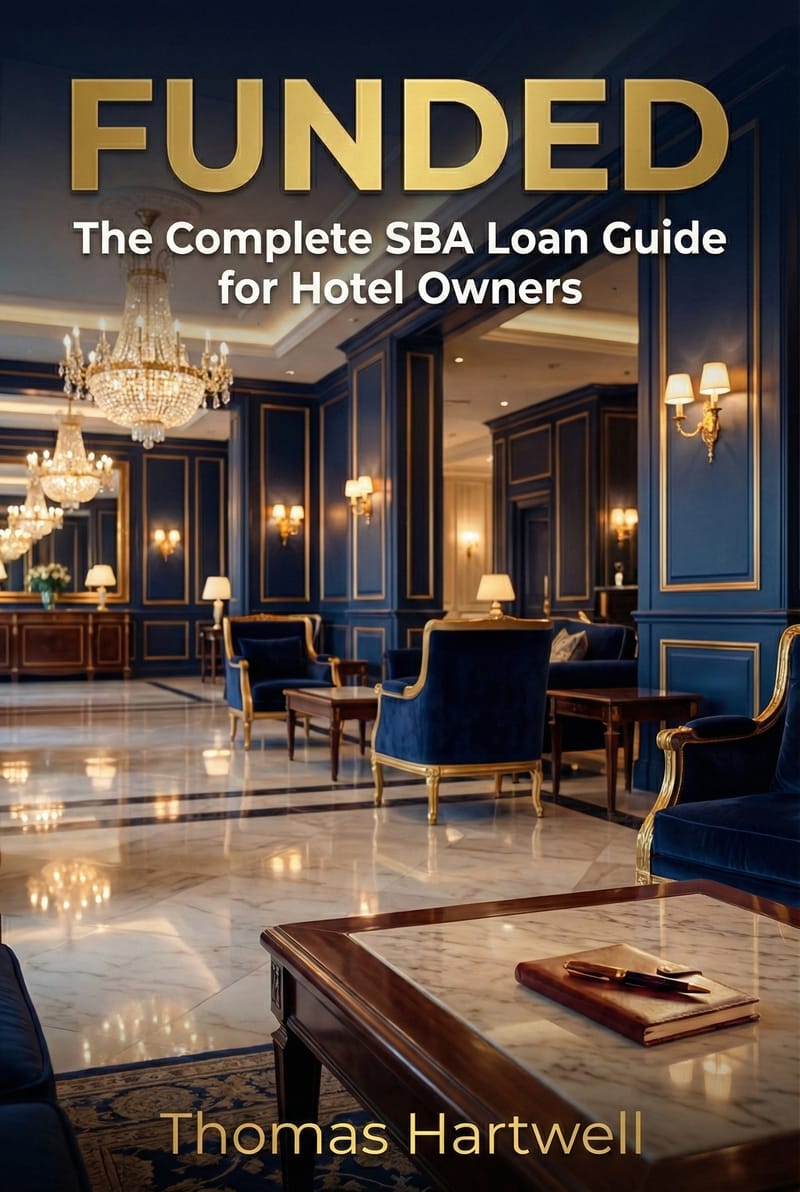
FUNDED: The Complete SBA Loan Guide for Hotel Owners covers everything from choosing between 7(a) and 504 programs to financing Property Improvement Plans (PIPs) for brand conversions. Whether you're buying your first independent motel or expanding into a flagged property, this guide shows you how to structure your deal for approval.
Throughout this guide, you'll follow three hotel owners through different SBA financing scenarios:
Raj is a first-time buyer looking at a 42-room independent motel off I-95 for $1.8 million. He has hospitality management experience but has never owned a property. His challenge: convincing lenders he can successfully operate his own hotel.
Anil is an experienced hotel owner expanding his portfolio with a flag conversion. His $2.5 million project includes both the acquisition and a significant PIP to meet brand standards. His challenge: financing the PIP while managing construction timeline.
Sarah owns a boutique hotel worth $4.2 million and wants to refinance to better terms. Her property is performing well, but her current loan has unfavorable terms. Her challenge: demonstrating that refinancing makes sense for her and the lender.
Why hotel deals are different and what lenders look for.
Comparing programs and when to use each—or both.
How brand affiliation affects your financing options.
What counts as experience and how to compensate.
Hotel-specific calculations and seasonality adjustments.
Financing Property Improvement Plans for brand conversions.
Down payment requirements and acceptable sources.
CDCs, Preferred Lenders, and hospitality specialists.
Documents, timeline, and managing the appraisal.
From approval to keys—and your ongoing obligations.
There is something for every hospitality professional no matter their level of experience.
— Kenneth Cameron, Amazon Verified Purchase · Apr 12, 2026
To get an SBA loan for a hotel, you need to meet basic SBA eligibility requirements, demonstrate relevant hospitality management experience, provide 10-20% equity injection, and show the property can service the debt (typically 1.20x DSCR minimum). The process involves finding an SBA Preferred Lender with hotel experience, submitting financials and a business plan, completing an SBA appraisal, and closing—typically 60-90 days total.
Yes. SBA loans are one of the most common financing methods for hotel acquisitions under $5 million. Both SBA 7(a) and SBA 504 programs can be used for hotel purchases. The key requirements are hospitality management experience, adequate down payment (10-20%), acceptable credit (typically 680+), and a property that generates sufficient cash flow to cover debt payments.
For hotel acquisitions, SBA 504 often provides better terms when real estate is the primary asset. The 504 program offers lower down payments (as low as 10%), fixed rates on the CDC portion, and longer terms. However, 7(a) provides more flexibility for working capital and can close faster. Many hotel deals use both programs together.
Lenders typically require 2-3 years of hotel management experience at a comparable property. Front desk or housekeeping experience alone is usually insufficient—lenders want to see P&L responsibility. If you lack direct experience, you can compensate with a qualified management company or experienced operating partner.
The SBA requires minimum 10% equity injection, but hotel deals often require 15-20% depending on the property type, your experience, and the lender. Flagged properties with strong brands may qualify for lower down payments than independent hotels.
Expect 60-90 days from application to funding for a well-prepared SBA hotel loan. The timeline includes lender review (2-3 weeks), SBA approval (1-2 weeks for Preferred Lenders), appraisal (2-4 weeks), and closing (1-2 weeks). Complex deals with PIP requirements or multiple properties may take longer.
Yes. SBA loans can finance PIP requirements for brand conversions or renewals. The PIP costs are typically rolled into the total project cost. Lenders will want to see the franchisor's PIP requirements and your timeline for completion.
Most lenders require a minimum DSCR of 1.20x to 1.25x for hotel loans, calculated using trailing 12-month financials or reasonable projections for acquisitions. Hotels have higher DSCR requirements than some other industries due to revenue volatility.
Most SBA lenders require a minimum credit score of 680 for hotel loans, though some will consider 650+ with strong compensating factors like significant hospitality experience, higher equity injection, or excellent property cash flow. The SBA itself doesn't set a minimum—individual lenders do.
Flagged properties (brand-affiliated hotels) are generally viewed as lower risk due to brand support, reservation systems, and loyalty programs. Independent hotels require stronger borrower experience and may face higher down payment requirements or interest rates.
Stop guessing about hotel financing. Get the hospitality-specific SBA guidance you need.