SBA Guides · Verified against SBA SOP 50 10 8.1 (effective Oct 1, 2026) · Updated November 2026
SBA's New Rulebook: What Changed for Business Buyers on October 1, 2026
SBA rewrote the rules for using a 7(a) loan to buy a business. If you priced a deal on last year's rules, some of your numbers just moved. Here's what changed, what didn't, and what to do about it.
The books
Pick the book for your industry
One book per industry, each with real deals worked step by step. Kindle $9.99, paperback $39.99.
 Restaurant
 Hotel
 Franchise
 Dental
 Veterinary
 Laundromat
 Car Wash
 Auto Repair
 Gas Station
 Liquor Store
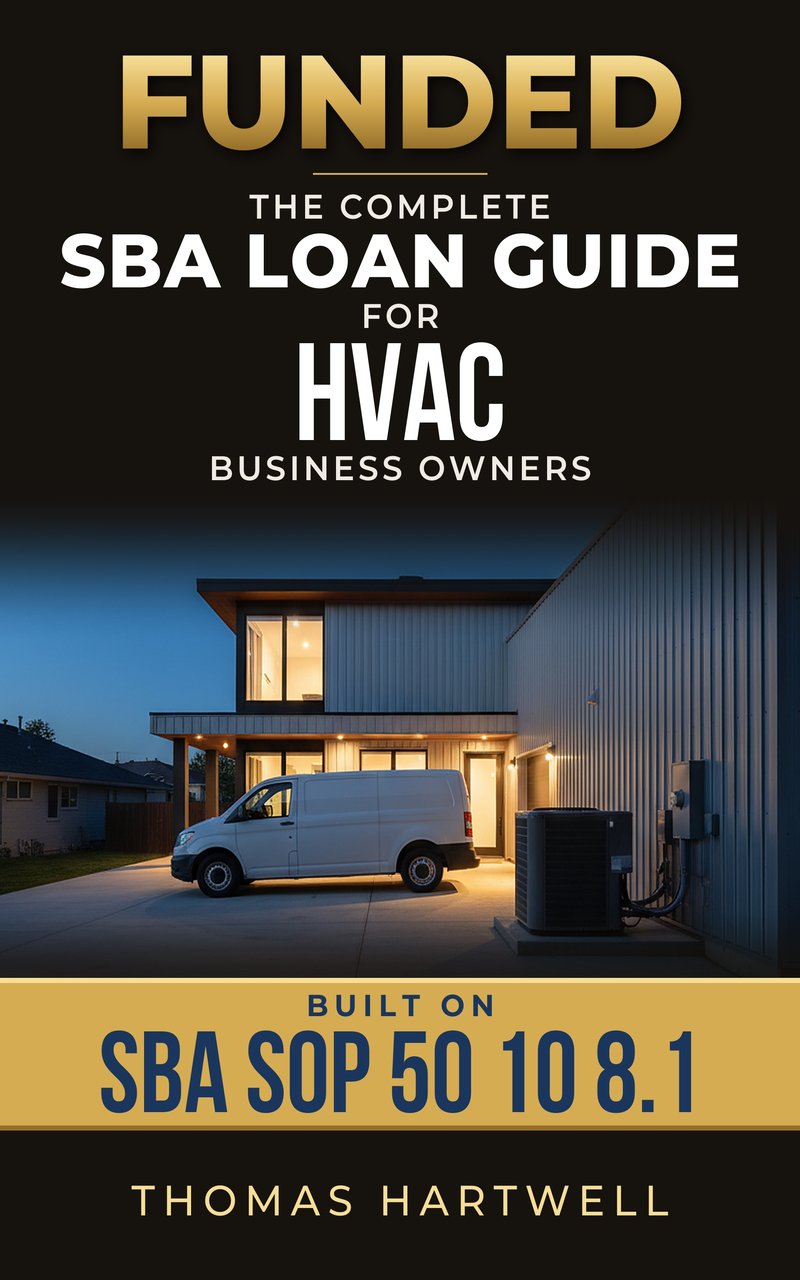 HVAC Business
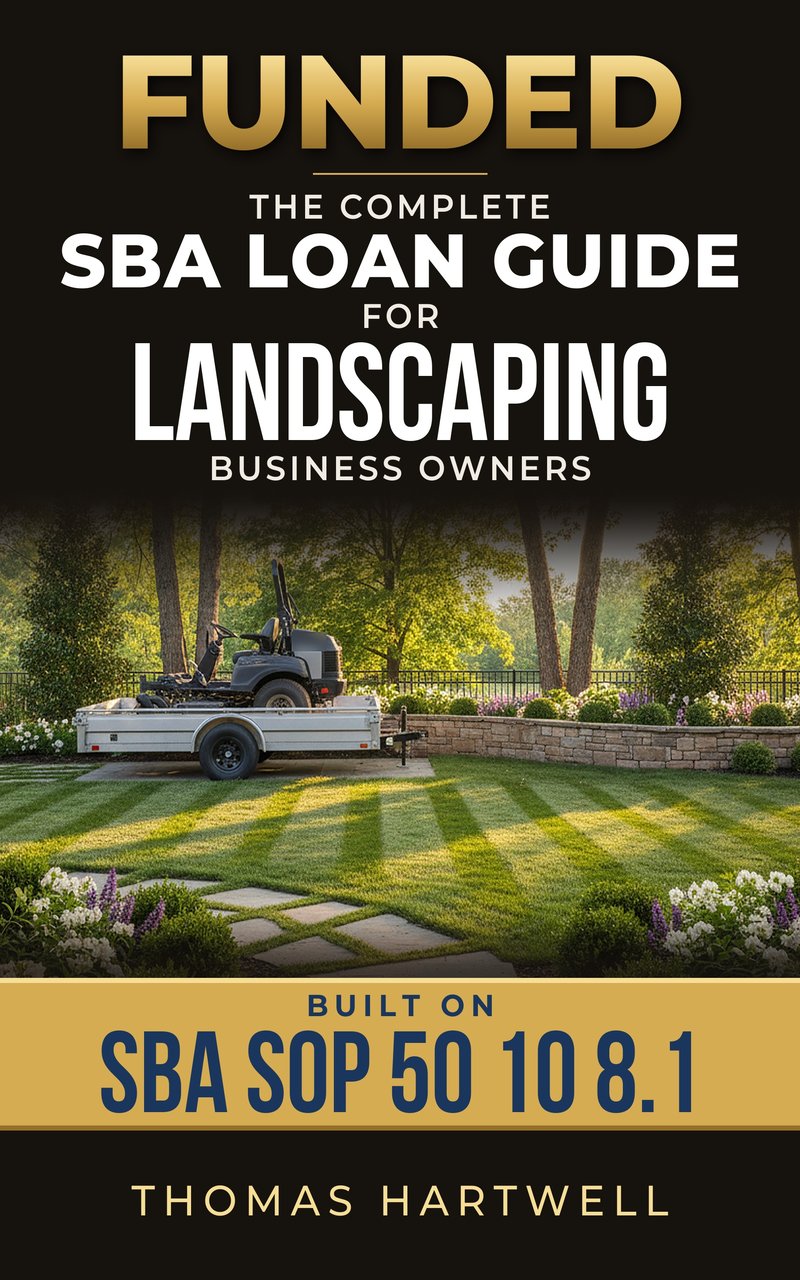 Landscaping Business
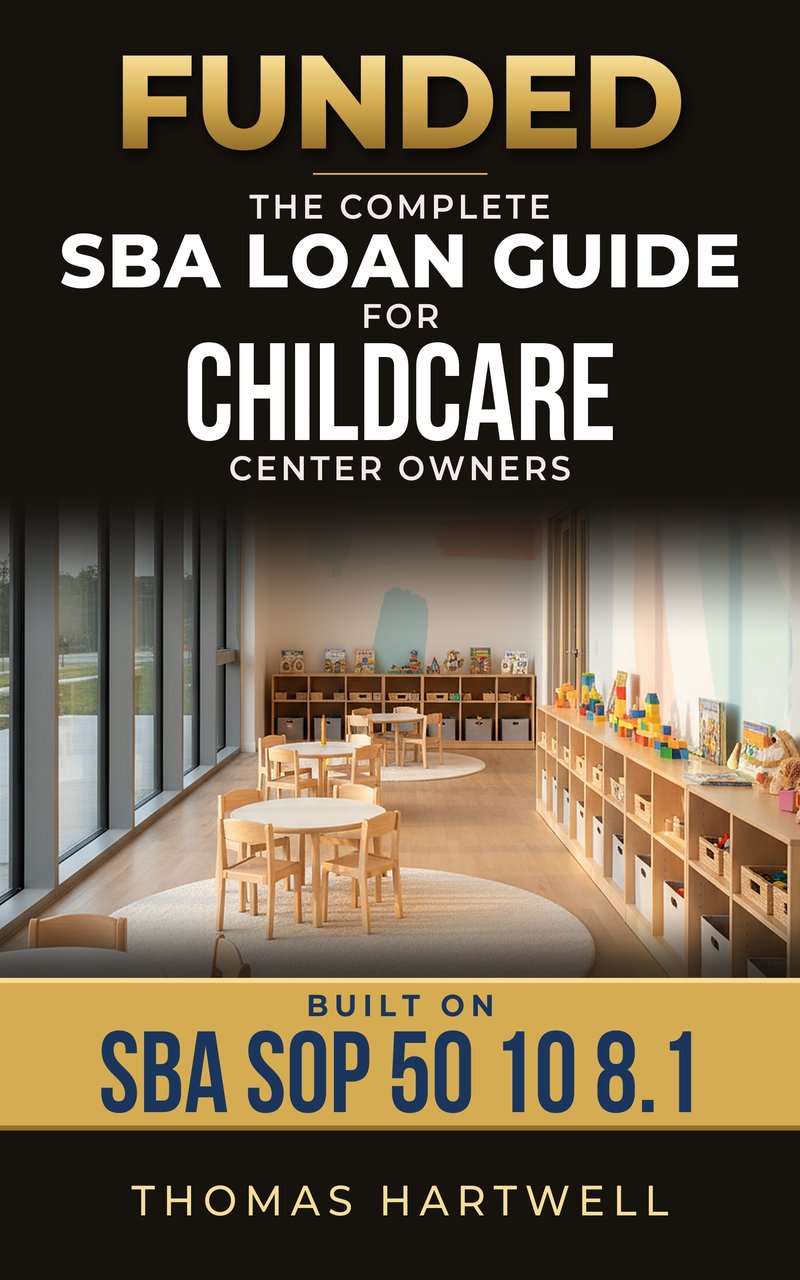 Childcare Center
See every book and its paperback
On Amazon. Education only. Not a lender. Not affiliated with the SBA.
SBA published SOP 50 10 8.1 on September 25, 2026, effective October 1, 2026. For a buyer, the biggest change is coverage: a first-time purchase now needs a 1.25 debt service coverage ratio on the seller's last full year (or two-year average), and projections can't get you there. Add a required Quality of Earnings report at a $3 million business price, a cap that keeps total debt at or under the valuation, a 10-year term on the business portion of the loan, and owners who must be U.S. citizens or nationals living in the U.S.
Written by Thomas Hartwell, author of the FUNDED series of industry-specific SBA lending guides.
The ten changes that matter to a buyer
| Rule | Before (SOP 50 10 8) | Now (SOP 50 10 8.1) |
|---|---|---|
| Cash flow coverage (DSCR) to buy a business | 1.15, and projections could carry a change of ownership | 1.25 for a new owner (Initial Acquisition) and for owner buyouts, 1.15 for a same-industry expansion, all on the seller's last full year or two-year average. Projections can't meet it (special-purpose property excepted) |
| Quality of Earnings report | Not required by SBA | Required at a business purchase price of $3 million or more (Initial Acquisition or Business Expansion); the loan is sized to the QoE earnings |
| Price above the valuation | The gap had to be financed subordinate to the SBA loan | Total debt, including any seller note that isn't on full standby, can't exceed the business valuation. The gap is your equity |
| What counts toward the 10% | Seller notes on full standby capped at half; outside investor money uncapped | Standby seller notes, other standby debt and minority investors (under 20%) together capped at half. On a first-time purchase the 10% can't be waived. Veteran exception, Nov 11, 2026 to Sep 30, 2027: the SBA has announced that an eligible veteran purchasing an existing business with a 7(a) loan may raise the full 10% from these sources (SBA News Release 26-117) |
| Loan term on the business portion | Up to 25 years if 51% or more of the deal was real estate | 10 years maximum; only the real-estate portion can reach 25 years (separate or blended loan); special-purpose property up to 25 years at 85%+ real estate |
| Who can own the business | U.S. citizens, U.S. nationals and green card holders (per the SOP text) | U.S. citizens and U.S. nationals with a U.S. principal residence only |
| Seller staying on after closing | Consultant for up to 12 months | Consultant for up to 24 months in total |
| Lender's own valuation allowed | Financing up to $250,000 net of real estate and equipment | Business purchase price of $350,000 or less (unless buyer and seller are closely related) |
| Receivables and inventory as collateral | Lien optional | Lender must take a lien on a purchase (counted at up to 10% of book) |
| 504 loans, cash flow coverage | 1 to 1 | 1.15 to 1 on historical results; if history falls short, the CDC must analyze projections |
Source: SBA SOP 50 10 8.1, Appendix 15 (7(a) Changes of Ownership); Section A, Ch. 1, Para. F (citizenship); Section C (504). SOP 50 10 8 (effective June 1, 2025) for the "before" column.
Update, November 10, 2026: A temporary exception for veterans: from November 11, 2026 through September 30, 2027, the SBA has announced that an eligible veteran purchasing an existing business with a 7(a) loan may raise the full 10% from seller notes on full standby, other standby debt and minority investors (SBA News Release 26-117); ask your lender how it applies. The SBA has not yet issued a procedural notice with the details, such as who counts as an eligible veteran.
One deal, both rulebooks
Say you're buying a business for $1,200,000, with $60,000 of working capital and $40,000 of closing costs rolled in. Total project: $1,300,000. Your 10% injection is $130,000, so the SBA loan is $1,170,000. At a 10.25% rate over 10 years, that's about $187,500 a year in payments. The seller's last full year shows $225,000 of cash flow available for debt service.
$225,000 divided by $187,500 is 1.20. Under the old rule, 1.20 cleared the 1.15 floor. Under SOP 50 10 8.1, a first-time purchase needs 1.25, so this deal fails as written. Strong projections for next year don't change that, because the test runs on the seller's history.
You have three ways to fix it, and each one is a trade-off:
- Put in more of your own money. About $46,700 more (roughly $176,700 total) shrinks the loan to the size 1.25 supports. You keep the price, and your cash takes the hit.
- Negotiate the price down. At a standard 10% down, 1.25 supports a price of about $1,148,000, roughly $52,000 off the ask. Your cash stays put, and the seller takes the hit.
- Ask the seller to carry more on full standby. The SOP lets you bring additional equity to shrink the loan, and a standby note adds no payment while the SBA loan is outstanding. The seller waits years to see that money, and the standby portion that counts toward your required 10% is still capped at half.
The rate and cash flow are illustrations; your lender's rate, add-back decisions and policy govern the real numbers.
What didn't change
- The 10% equity injection on a business purchase, based on total project cost.
- Full standby still means no principal and no interest to the seller for the life of the SBA loan (SBA Form 155).
- Global coverage still has to be at least 1 to 1, and start-ups and other 7(a) loans over $350,000 still need 1.15.
- Collateral still can't decline a loan by itself: "A loan request must not be declined solely because collateral is inadequate." Used equipment still counts at 50% of net book value, furniture at 10%.
- Loan limits: $5 million for a standard 7(a) loan, an 85% guaranty up to $150,000 and 75% above it.
- Seller earnouts are still prohibited.
Buying a hotel? Read this part twice
SOP 50 10 8.1 carves out special-purpose property, and its own examples are storage units and hotels where the real estate fully secures the loan. When the lender documents that a property qualifies, it can underwrite on projections (the floor has to be met within two years), stretch the term up to 25 years when 85% or more of the project is real estate, and skip the Quality of Earnings report. That's the lender's call to document, not an automatic pass, so ask early whether your hotel fits.
If you're in the middle of a deal
- Ask your lender which version governs your application. Deals already in process may be handled differently from new submissions.
- Re-run your coverage on the seller's history. If you were counting on projections or a 1.15 floor, run it at 1.25 now.
- Check your price against the valuation. Any amount above the appraised value has to be your equity.
- Look at your seller note. If it was counting toward your 10% alongside investor money, the two now share one half-of-the-injection cap.
- At $3 million and up, budget for a Quality of Earnings report and the time it takes. Its cost can count toward your equity.
Sources
- SBA SOP 50 10 8.1, Lender and Development Company Loan Programs (published September 25, 2026; effective October 1, 2026)
- SBA Information Notice 5000-881797, 7(a) Fees for Fiscal Year 2027 (effective October 1, 2026)
- SBA Information Notice 5000-881796, 504 Fees for Fiscal Year 2027 (effective October 1, 2026)
Run your deal at the new floor
The free max purchase price calculator now defaults to 1.25 coverage and the 10-year term, and the equity injection calculator applies the new half cap. Start there, then take the numbers to your lender.
Run the new tests on your actual deal
The "Will the SBA Fund This Deal?" kit is rebuilt for SOP 50 10 8.1. It tests your business coverage at 1.25 on the seller's numbers and your global coverage at 1:1, checks your 10% injection against the new half cap on seller notes and investor money, flags the Quality of Earnings rule at $3 million, and turns it all into a walk-away price.
See the KitSOP 50 10 8.1, FAQ
What is SBA SOP 50 10 8.1?
It's the SBA's rulebook for 7(a) and 504 lenders, Standard Operating Procedure 50 10, version 8.1. SBA published it on September 25, 2026, and it took effect October 1, 2026, replacing SOP 50 10 8 (effective June 1, 2025). Most of the changes that matter to a buyer live in a new section, Appendix 15, which now governs every 7(a) loan used to buy a business.
What DSCR do I need to buy a business with an SBA loan now?
If you're a new owner buying a business (SBA calls this an Initial Acquisition), the business needs a debt service coverage ratio of at least 1.25 to 1, measured on the seller's last full fiscal year or the average of the last two, on a historical or documented adjusted basis. Projections can't be used to meet it, with one exception for special-purpose property such as many hotels where the real estate fully secures the loan. If you already own a business with two full fiscal years under your ownership and it buys 100% of the ownership interest in another business in the same four-digit NAICS industry group, the floor is 1.15. Buying another business's assets counts as an Initial Acquisition. Your household's global coverage still has to be at least 1 to 1.
Does the 1.10 DSCR for small SBA loans apply to buying a business?
No. The 1.10 to 1 standard in SOP 50 10 8.1 is for 7(a) Small Loans of $350,000 or less that are not changes of ownership. The SOP says plainly that no reduced or alternative coverage standard applies to an acquisition just because it's a 7(a) Small or SBA Express loan.
When is a Quality of Earnings report required for an SBA loan?
When you're buying a business (an Initial Acquisition or a Business Expansion) and the business purchase price is $3 million or more, measured before your equity, seller financing or other funding, and excluding owner-occupied real estate. The QoE has to be independent and done for the lender, it must include a cash proof that reconciles bank statements to the income statement and tax returns, and the lender has to use its earnings to size the loan. Owner buyouts, ESOP deals and special-purpose property acquisitions don't need one.
Can a seller note still count toward my SBA down payment?
Yes, if it's on full standby, meaning the seller gets no principal and no interest for the entire term of the SBA loan, documented on SBA Form 155. Under SOP 50 10 8.1, a standby seller note, other standby debt and money from a minority investor (under 20%, no control) together can cover no more than half of the required injection. At least half has to come from you: cash you didn't borrow against the business, a documented gift, a personal loan to a guarantor repaid from outside the business, or a qualifying grant. A temporary exception for veterans: from November 11, 2026 through September 30, 2027, the SBA has announced that an eligible veteran purchasing an existing business with a 7(a) loan may raise the full 10% from seller notes on full standby and the other limited sources (SBA News Release 26-117); ask your lender how it applies.
Can green card holders get an SBA loan?
Not as owners or required guarantors. SOP 50 10 8.1 requires that 100% of a business's direct and indirect owners and SBA-required guarantors be U.S. citizens or U.S. nationals whose principal residence is in the United States. Lawful permanent residents, including conditional residents, are listed as ineligible persons. SBA had already restricted this by notice earlier in 2026; the new SOP writes it into the rulebook.
How long can an SBA loan for buying a business run?
The part of the loan that pays for the business itself, including goodwill, equipment and working capital, can't amortize over more than 10 years. If you're also buying the real estate, only the real-estate portion can go up to 25 years, either as a separate loan or blended into one weighted-average term. The old rule that let a purchase with 51% or more real estate run 25 years is gone. A special-purpose property, such as many hotels, can get up to 25 years when 85% or more of the project cost is real estate.
Get the free 27-Point SBA Loan Checklist
What lenders check before you apply, in order. No purchase needed.
✓ You're in!
Your 27-point SBA loan checklist is downloading now, check your downloads folder. We've also added you to the list for SBA updates from Hartwell Labs.
Enter your email and we'll send you the free 27-point checklist instantly.
Enter your email and we'll send you the free 27-point checklist instantly.
No spam. Unsubscribe anytime. We'll also notify you of new book editions.