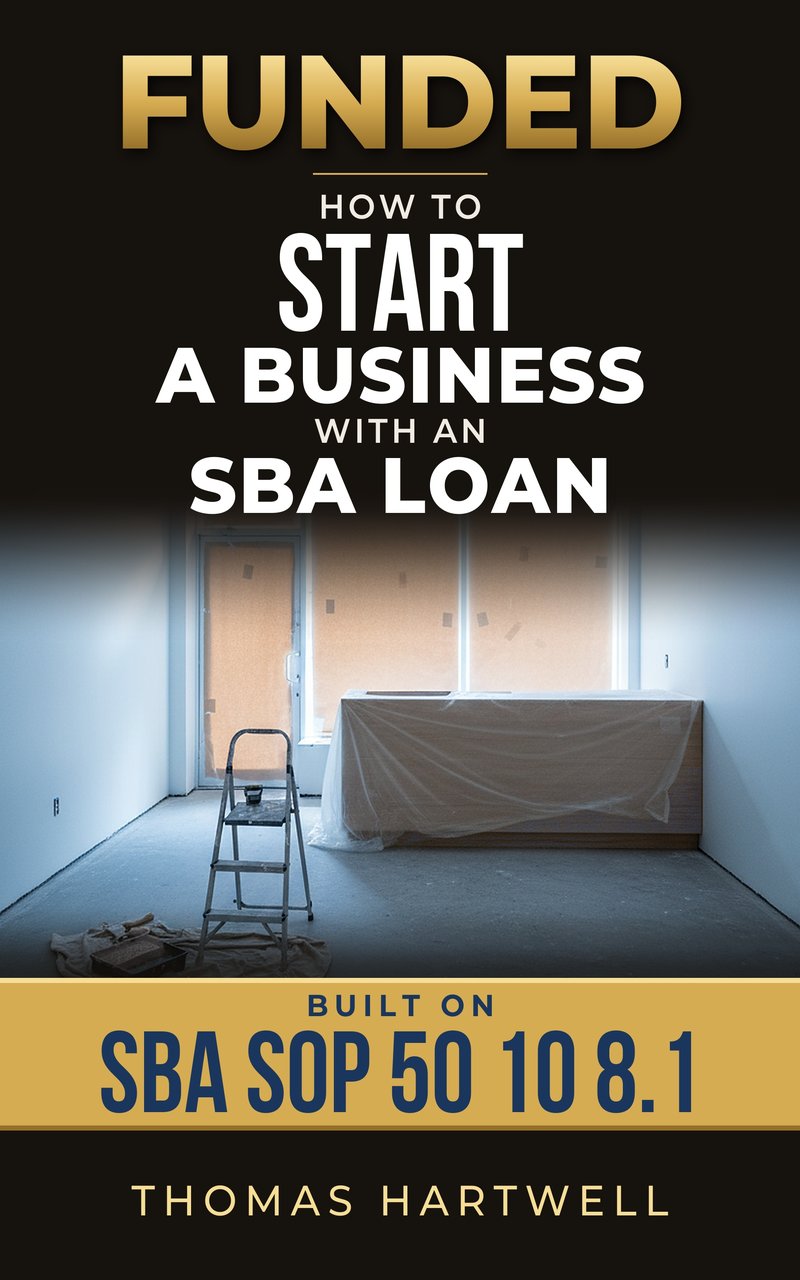
Coming soon
How to Start a Business with an SBA Loan
A step-by-step guide for start-ups. A business that hasn't opened has no tax returns to show, so SBA lenders judge your projections. Each program sets its own test, and a 7(a) start-up needs 10% of the project in your own money.
Get an email the day it's out
One email at launch. You also get the free 27-point SBA loan checklist now.
✓ You're in!
Your 27-point SBA loan checklist is downloading now, check your downloads folder. We've also added you to the list for SBA updates from Hartwell Labs.
Enter your email and we'll send you the free 27-point checklist instantly.
Enter your email and we'll send you the free 27-point checklist instantly.
No spam. Unsubscribe anytime. We'll also notify you of new book editions.
What's inside
- Which loan fits: 7(a), Express, Microloan or 504
- How much of your own money goes in
- How lenders judge a business with no history
- Opening a franchise with an SBA loan
- Collateral, your home, and the personal guaranty
While you wait for the book, read the free SBA startup loans guide, or find your loan with the free SBA loan chooser.
Three founders, three deals
Rhea has groomed dogs for nine years and run someone else's salon for four. She has $35,000 saved and a $300,000 plan, and two SBA programs could fund all of it.
Felix has run six restaurants for someone else and now wants a franchise unit of his own. His projections say year one won't cover the loan payments, and the SBA rules say that can be fine.
Harriet sold flooring for fourteen years and wants a showroom in a building she owns. A 504 and a single 7(a) can both fund her $1,600,000 plan, with different cash up front and different monthly payments.
Every SBA loan rule is checked against SBA SOP 50 10 8.1 (effective October 1, 2026), 13 CFR Part 120, and current SBA notices.